
Real Relief from a
Pinched Nerve
A pinched nerve can turn ordinary moments — sitting, sleeping, reaching — into a source of intense pain. Surgery isn't the only answer.
A pinched nerve is one of the most frustrating conditions to live with — the pain, numbness, and weakness can show up anywhere in your body, often far from where the actual problem is. Many patients across Canton and Stark County are told to manage it with pain medication or wait it out, without ever exploring what targeted, non-surgical treatment can accomplish. At Advanced Disc & Joint Solutions, we've spent 40+ years identifying the root cause of nerve compression and addressing it directly — without surgery or injections.
Our team will review your symptoms and imaging to build a personalized treatment plan designed to take pressure off the nerve and restore normal function. If you're in pain, we're ready to help.
What Is a Pinched Nerve?
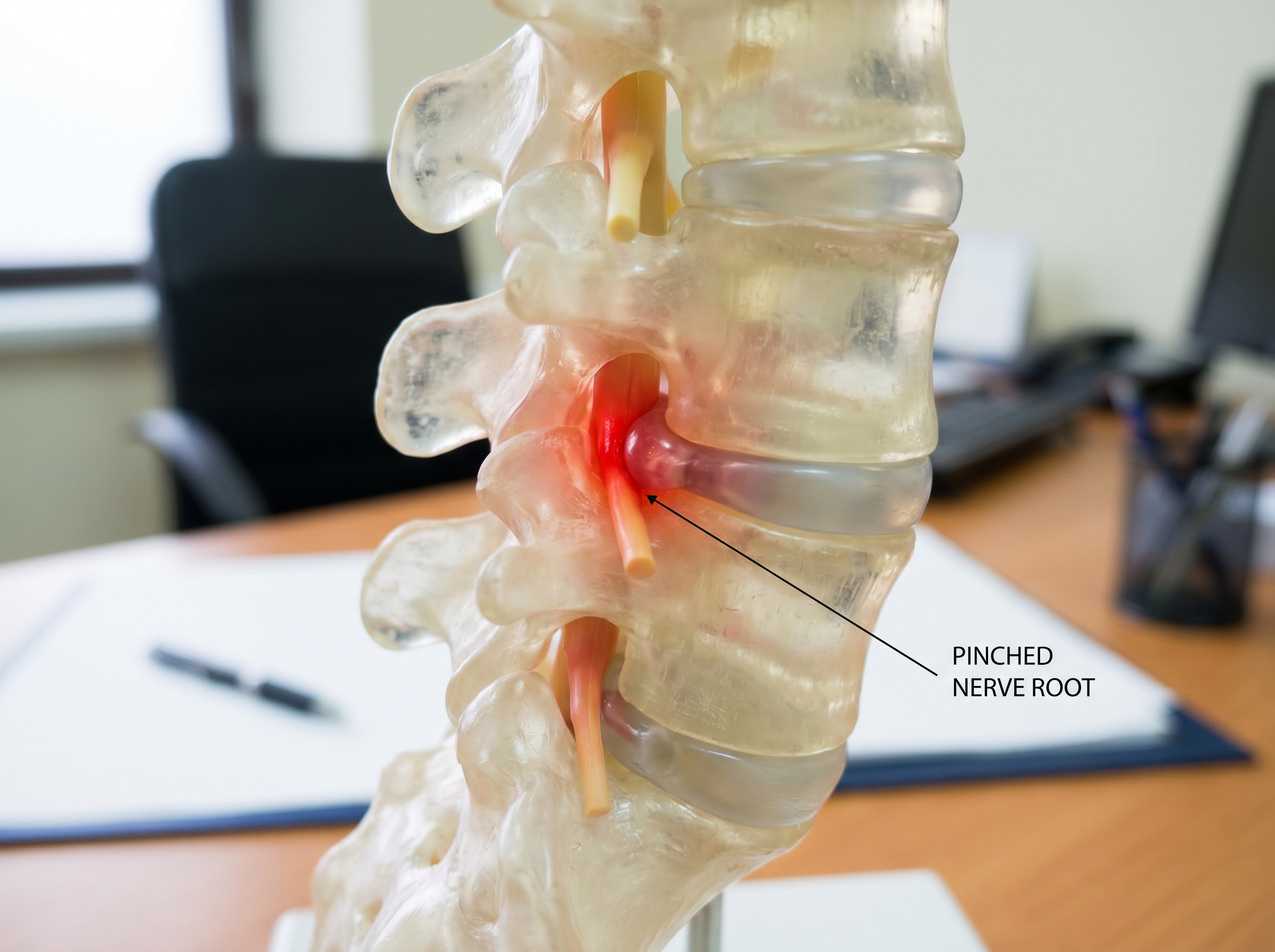
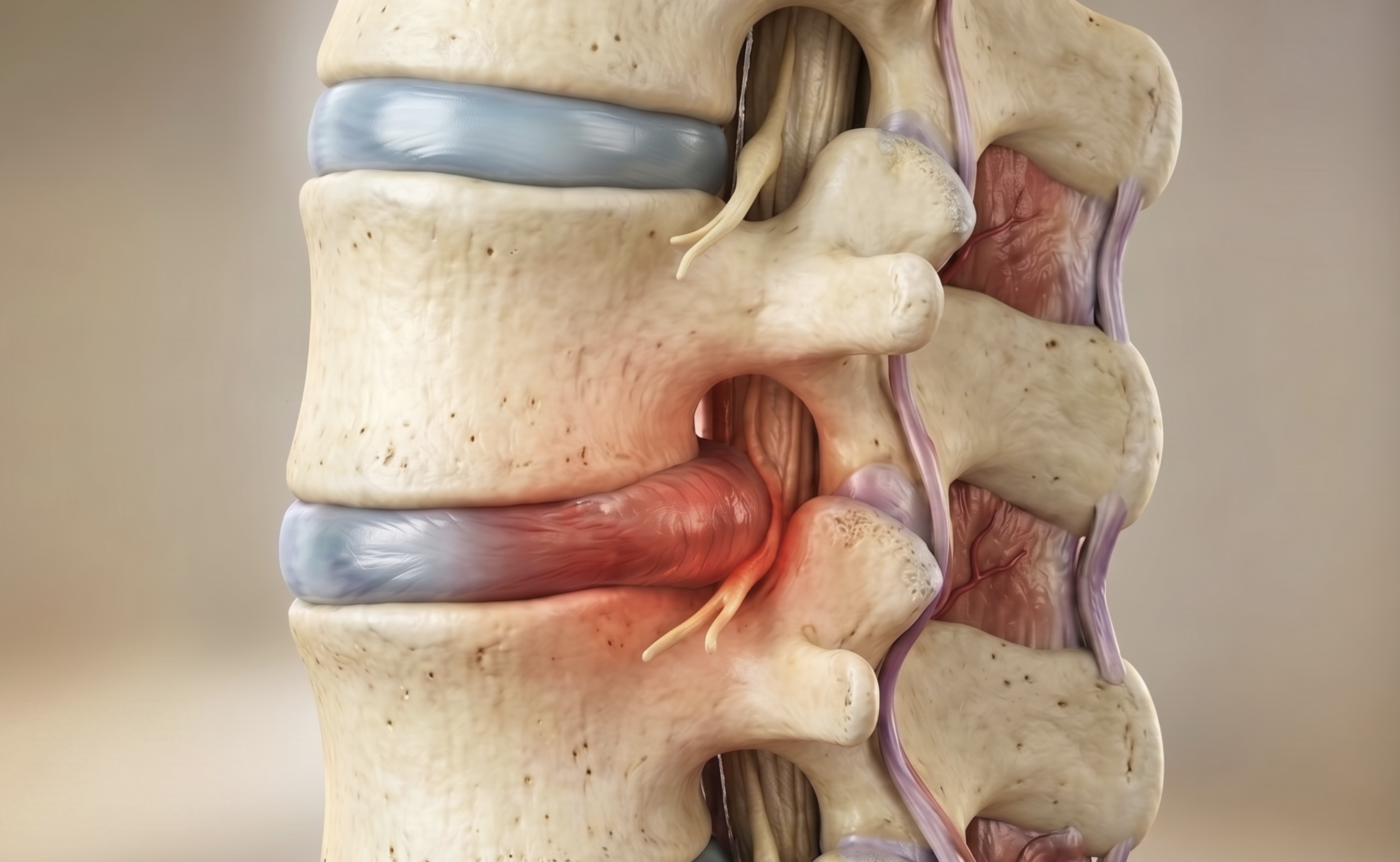
A pinched nerve — medically called nerve compression or radiculopathy — occurs when surrounding tissue places too much pressure on a nerve. That tissue is most often a herniated disc, a bone spur, or a thickened ligament pressing against a nerve root where it exits the spine.
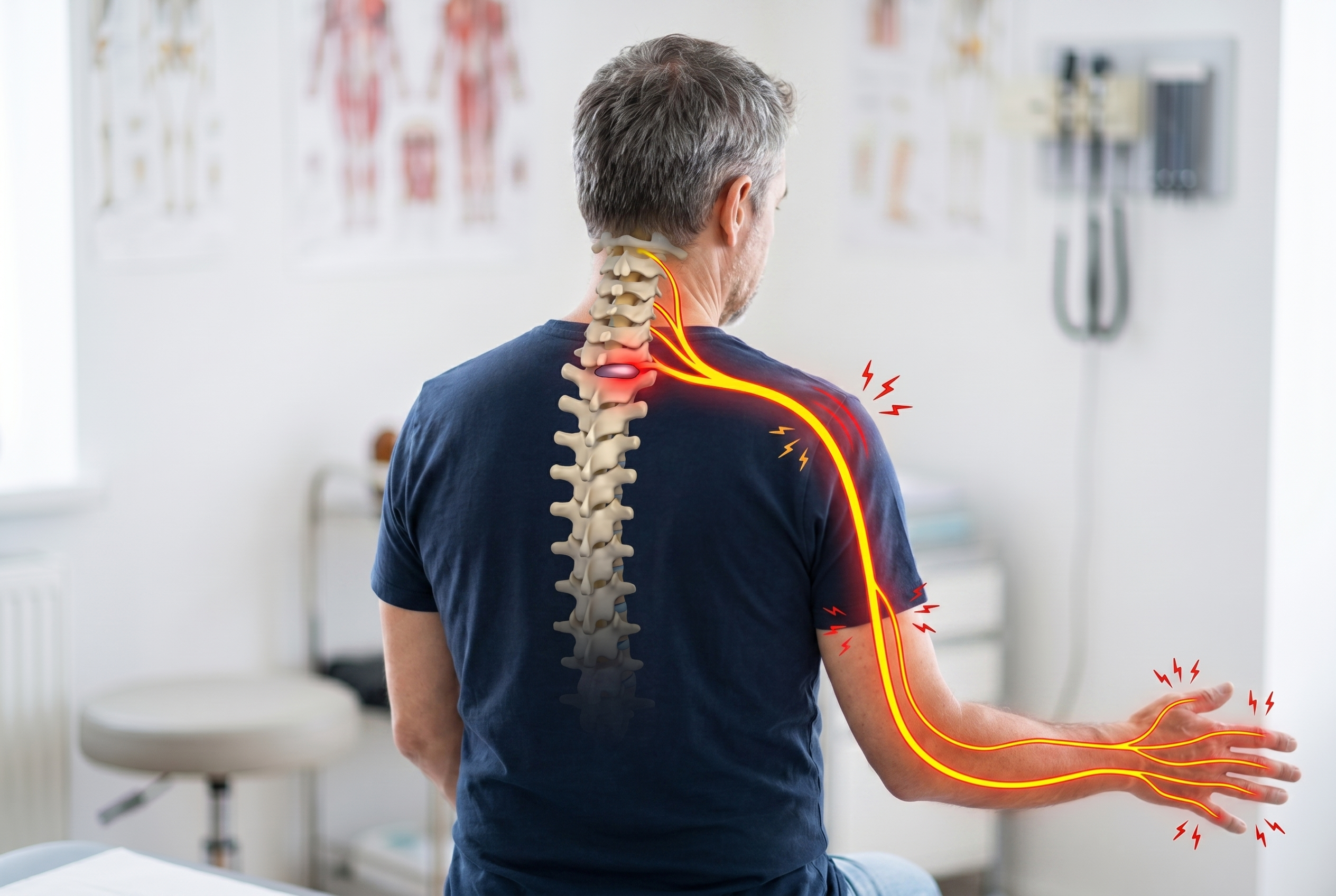
The spine is the most common origin point. When a nerve root in the cervical (neck) or lumbar (lower back) spine is compressed, the resulting pain, tingling, and numbness can travel far down the arm or leg — a pattern known as referred pain.
The location where you feel the pain and the location where the problem actually exists are often not the same. That's why identifying the specific compressed nerve root — not just treating the symptom — is the key to lasting relief.
Common Causes of a Pinched Nerve
Most pinched nerves in the spine originate from disc or structural changes that develop gradually over time. These are the most common causes we see in patients from Canton, Massillon, North Canton, and the surrounding communities.
- Disc Herniation — A ruptured disc pushes gel-like material directly against a nearby nerve root, creating immediate and often intense compression symptoms.
- Disc Bulge — A disc that extends beyond its normal boundary can press steadily on a nerve root, often causing gradually worsening symptoms over weeks or months.
- Degenerative Disc Disease — As discs lose height over time, the spaces through which nerve roots exit the spine narrow — increasing the likelihood of compression.
- Spinal Stenosis — General narrowing of the spinal canal creates sustained pressure on nerve roots, often producing symptoms that worsen with prolonged standing or walking.
Symptoms of a Pinched Nerve
Pinched nerve symptoms vary widely depending on which nerve is affected and how severely it is compressed. If any of the following sound familiar, don't wait — symptoms that are caught early respond better to conservative treatment.
- Sharp, burning, or shooting pain in the neck, mid-back, or lower back
- Radiating pain that travels down one arm or one leg
- Tingling or "pins and needles" sensation in the arm, hand, leg, or foot
- Numbness or reduced sensitivity in an extremity
- Muscle weakness in the arm, hand, leg, or foot
- Pain that worsens with certain postures, movements, or prolonged sitting
How We Treat Pinched Nerves
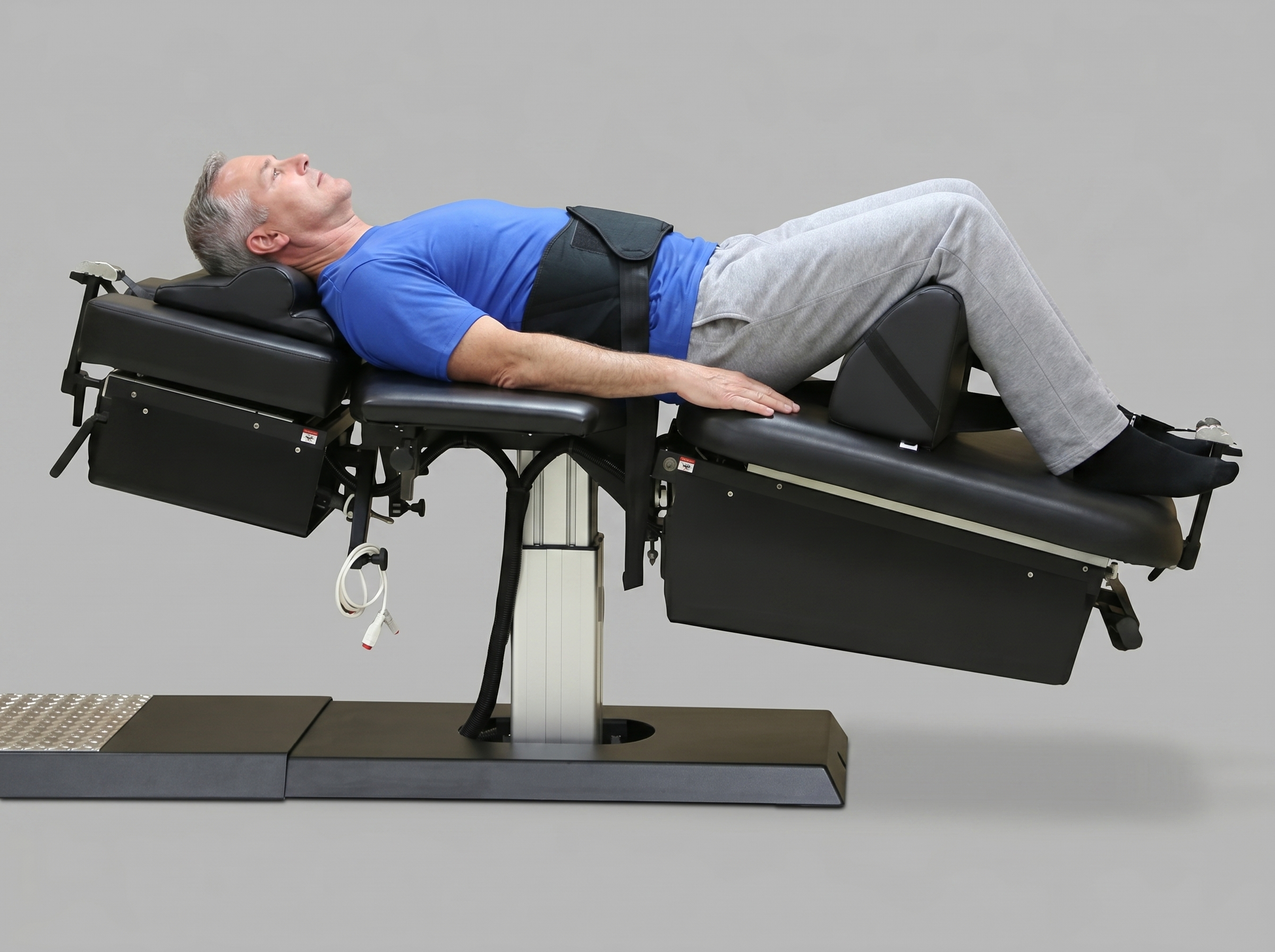
Our specialized approach uses non-surgical spinal disc decompression — a proven method that directly addresses the disc-based compression causing your nerve symptoms, without surgery, injections, or medication. The treatment creates precise negative pressure inside the affected disc, reducing compression on the pinched nerve root and allowing the disc to rehydrate and stabilize.
As disc pressure decreases and the nerve root is decompressed, radiating pain, tingling, and numbness begin to resolve — often in ways that rest and medication alone cannot achieve.
- FDA-cleared, non-invasive decompression therapy
- Targets the specific disc level confirmed by your imaging
- Comfortable 30-minute sessions with no downtime
- Personalized plan built around your condition, severity, and goals
Your Personalized Treatment Plan
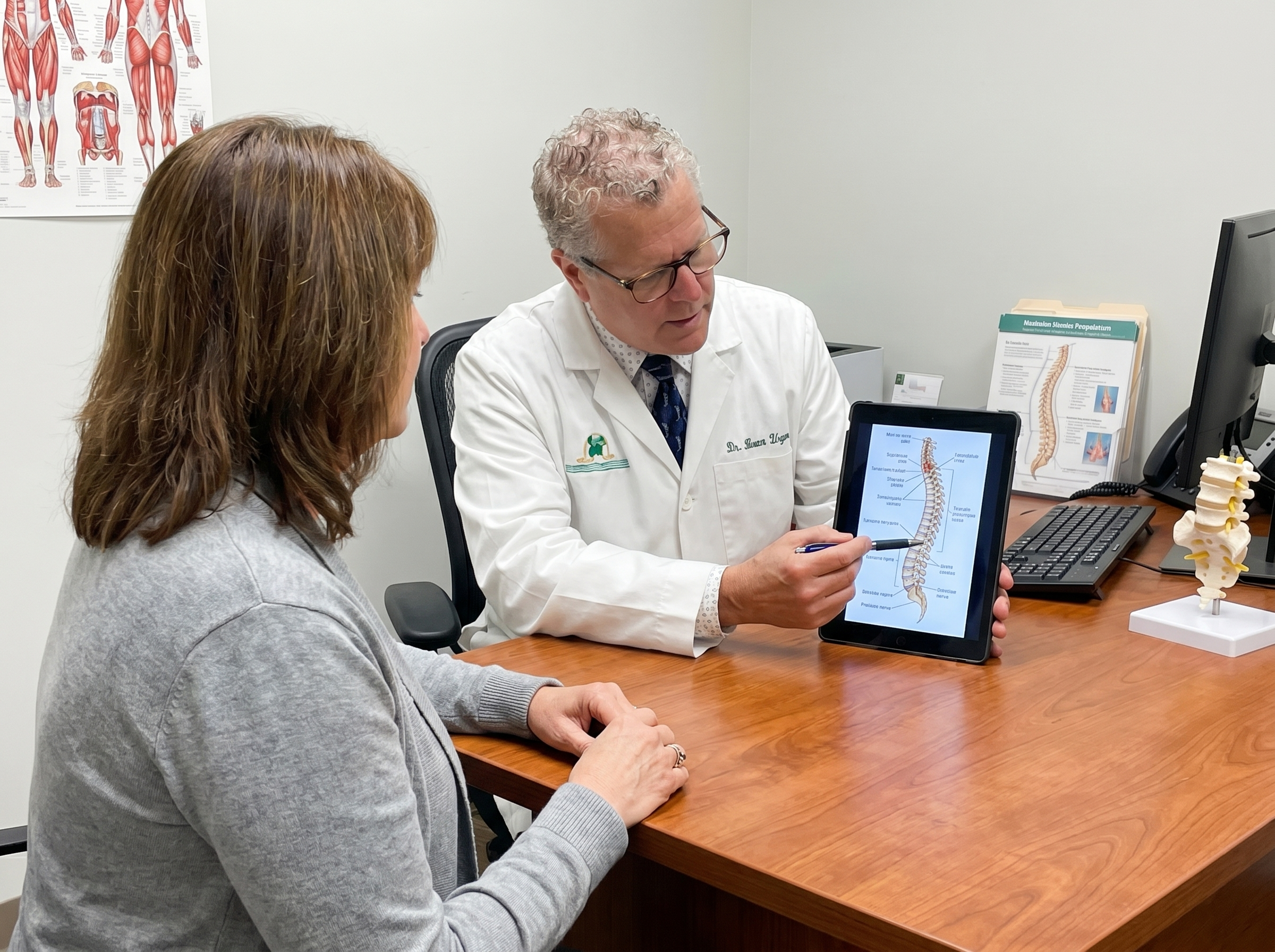
Your first appointment begins with a thorough evaluation — a review of your symptoms, a spinal exam, and your imaging to identify exactly which nerve root is compressed and what is causing it. From there, a customized treatment plan is built around your specific condition and goals.
Recovery timelines depend on the location and severity of compression, as well as how long you've been experiencing symptoms. Our team monitors your progress closely and adjusts your plan as needed to keep things moving in the right direction.
"We're not here to keep you in treatment longer than necessary. We're here to fix the problem and get you back to your life."
Frequently Asked Questions
Schedule Your Pinched Nerve Consultation
You don't have to keep managing nerve pain with medication or accept surgery as your only option. Relief is possible, and it starts with a conversation. We're accepting new patients from Canton, North Canton, Massillon, Jackson Township, Belden Village, and surrounding communities.