
Finding Real Relief
from Chronic Headaches
Persistent headaches that start at the base of your skull and radiate forward may be coming from your neck — not your head. Non-surgical relief is possible, and it starts with understanding the real source of your pain.
Headache treatment in Canton, OH is available at Advanced Disc & Joint Solutions, where Dr. Brent Ungar and Dr. Anthony Gatelaro offer a non-surgical, drug-free approach for patients whose chronic headaches originate in the cervical spine. Many persistent headaches — including tension-type and cervicogenic headaches — are rooted in disc problems, nerve irritation, or structural dysfunction in the upper neck rather than in the head itself.
Our providers have over 40 years of combined experience treating spine-related conditions throughout Canton, Jackson Township, and Stark County. If you've been managing your headaches with medication or repeated doctor visits without lasting relief, a cervical evaluation may reveal a cause that hasn't yet been addressed.
What Are Cervicogenic Headaches?
Cervicogenic headaches are defined by their origin: they arise from dysfunction in the cervical spine, most commonly in the upper three vertebral segments. Pain typically begins at the base of the skull or in the upper neck and radiates forward into the head, often affecting one side more than the other. According to research published in the journal Cephalalgia, cervicogenic headache accounts for approximately 4 percent of all headaches in the general population — though it is frequently underdiagnosed because it resembles migraine and tension-type headache.
Tension-type headaches are also commonly linked to muscular tension in the neck and shoulders. When that tension is driven by cervical disc problems, joint dysfunction, or postural stress on the upper spine, spinal treatment can relieve both the headache and its structural cause.
Patients with a history of neck injury, chronic neck stiffness, or headaches that worsen with certain head positions are among the most common candidates for cervical evaluation at Advanced Disc & Joint Solutions.

How Disc & Nerve Problems Cause Headaches
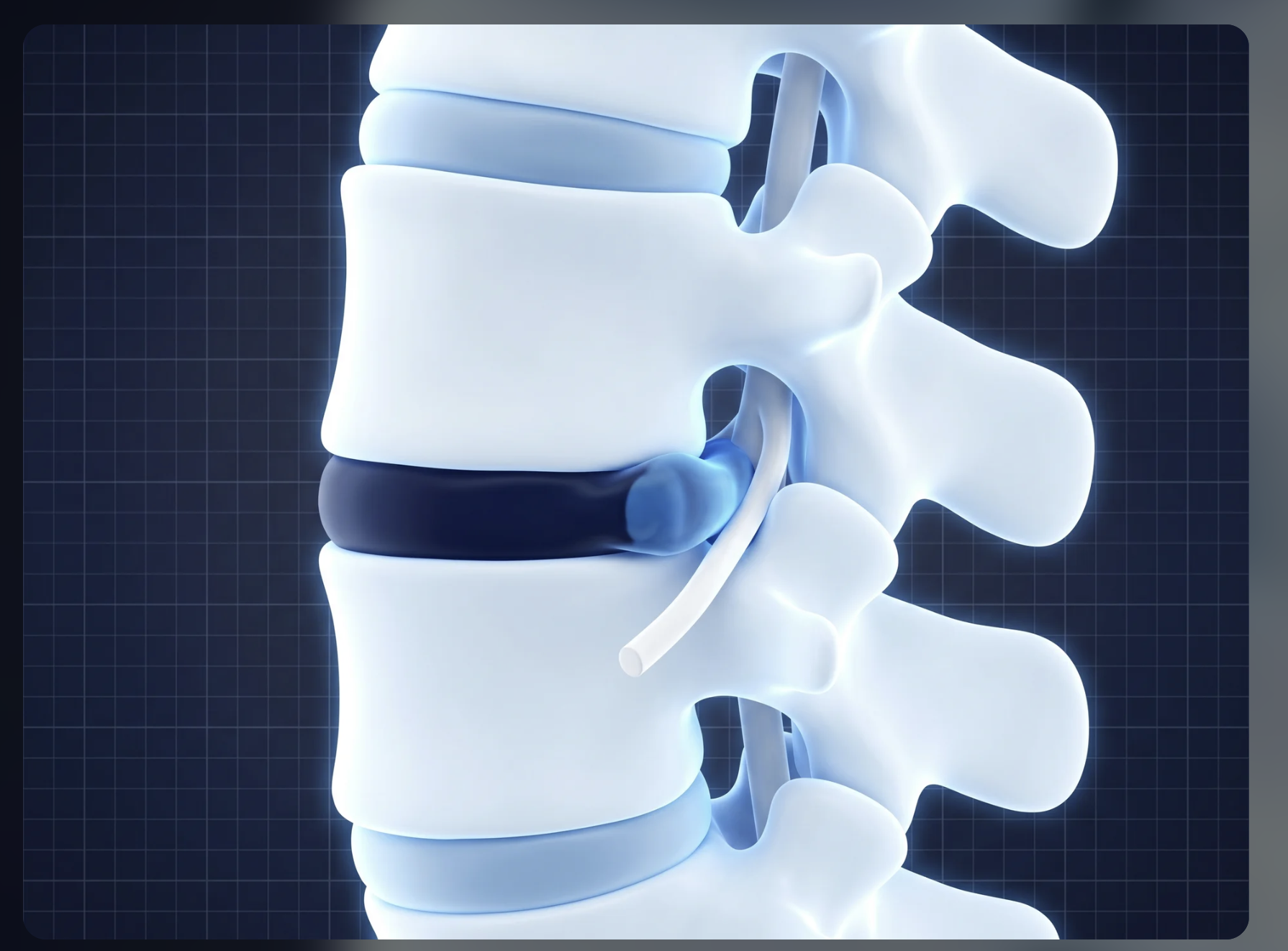
The upper cervical spine houses the C1, C2, and C3 nerve roots, which share referral pathways with the trigeminal nerve — the primary pain-sensing nerve in the head and face. When discs at these levels degenerate, bulge, or compress surrounding nerve tissue, pain signals travel along those shared pathways into the head. These four structural conditions are the most common causes we identify at Advanced Disc & Joint Solutions.
- Upper Cervical Disc Degeneration — Discs at C1–C3 lose height and shock-absorbing capacity over time, narrowing the foraminal openings and increasing pressure on the nerve roots that refer pain into the head.
- Cervical Disc Herniation or Bulge — Herniated or bulging disc material in the upper cervical spine presses directly on the nerve roots that share referral pathways with the trigeminal nerve, generating headache patterns that feel internal.
- Foraminal Stenosis — Narrowing of the exit channels for cervical nerve roots places sustained pressure on the nerves, producing chronic headaches that often worsen with specific head positions or prolonged sitting.
- Structural Tension Cycle — Compressed cervical nerves trigger protective muscular bracing in the neck and shoulders, which compounds the structural stress and sustains the headache pattern in a self-perpetuating loop.
Symptoms of a Cervical Headache
Cervicogenic and tension headaches related to spine dysfunction tend to follow recognizable patterns. If several of the following are familiar, a cervical evaluation is worth pursuing — an accurate diagnosis requires imaging review and a clinical assessment of the specific cervical levels involved.
- Headaches that begin at the base of the skull or upper neck and spread forward
- Pain that worsens with sustained head positions, neck rotation, or prolonged sitting
- Chronic neck stiffness or soreness that accompanies or precedes headache episodes
- Headaches on one side of the head that don't respond consistently to over-the-counter medication
- A history of neck injury, whiplash, or prior cervical disc diagnosis
- Shoulder or arm tension that travels upward toward the head
- Headaches that worsen with eye strain, screen use, or forward head posture

How We Treat Cervicogenic Headaches
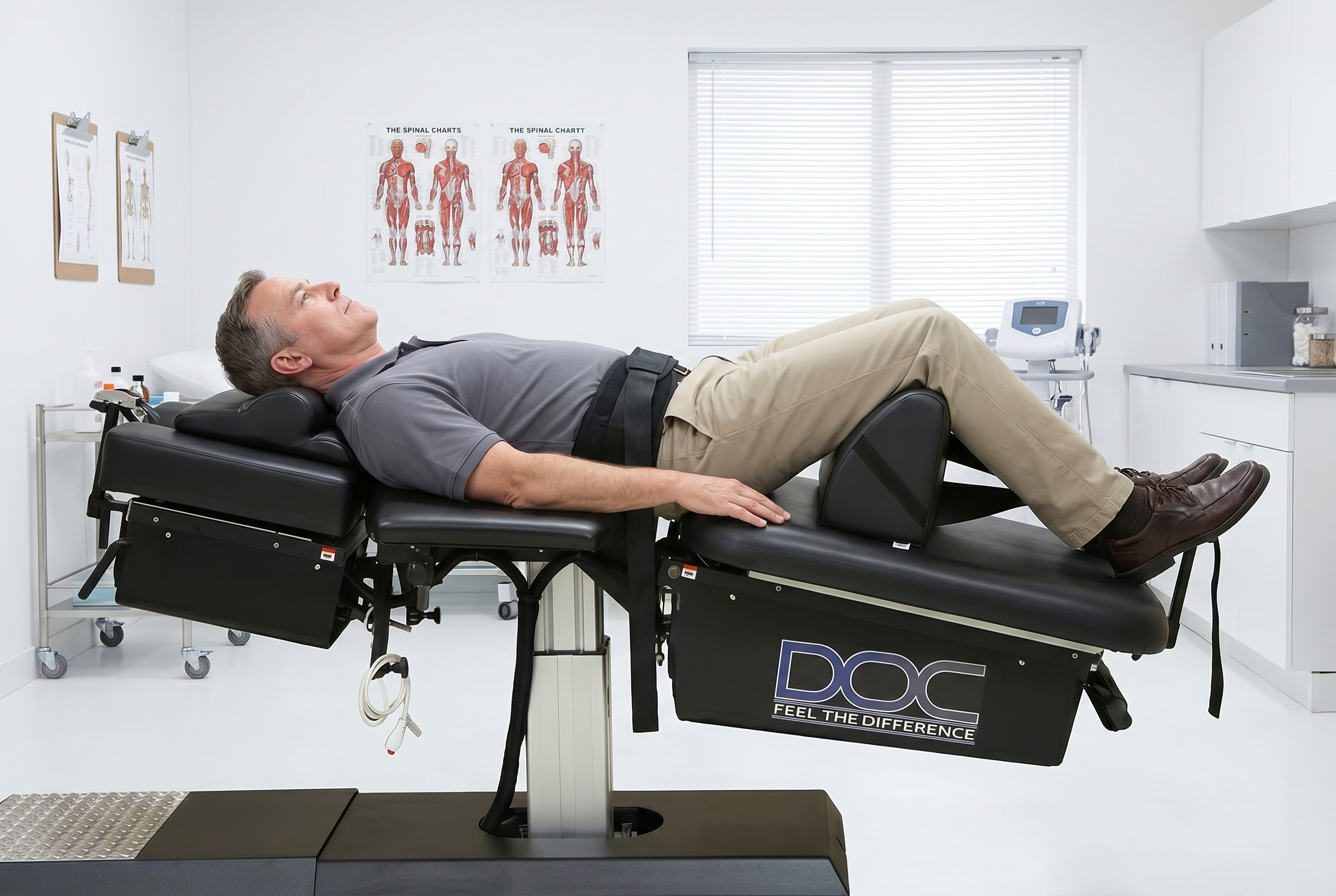
The primary treatment at Advanced Disc & Joint Solutions is non-surgical spinal decompression therapy applied to the cervical spine. Decompression uses precise, controlled traction to separate the vertebral segments at the affected levels, reduce disc pressure, and create space for irritated nerve roots to recover. Sessions are performed on an FDA-cleared decompression table and typically run about 30 minutes with no downtime required.
Unlike medication — which provides temporary relief by interrupting pain signaling — or injections, which reduce inflammation without resolving structural dysfunction, decompression works at the mechanical level. The goal is not to mask the symptom but to resolve the underlying cervical dysfunction so the headaches lose their structural trigger.
- FDA-cleared, non-invasive cervical decompression therapy
- Targets the specific disc levels confirmed by your imaging
- Comfortable 30-minute sessions with no recovery time required
- Personalized treatment plan based on your cervical diagnosis and symptom pattern
Your Personalized Headache Treatment Plan
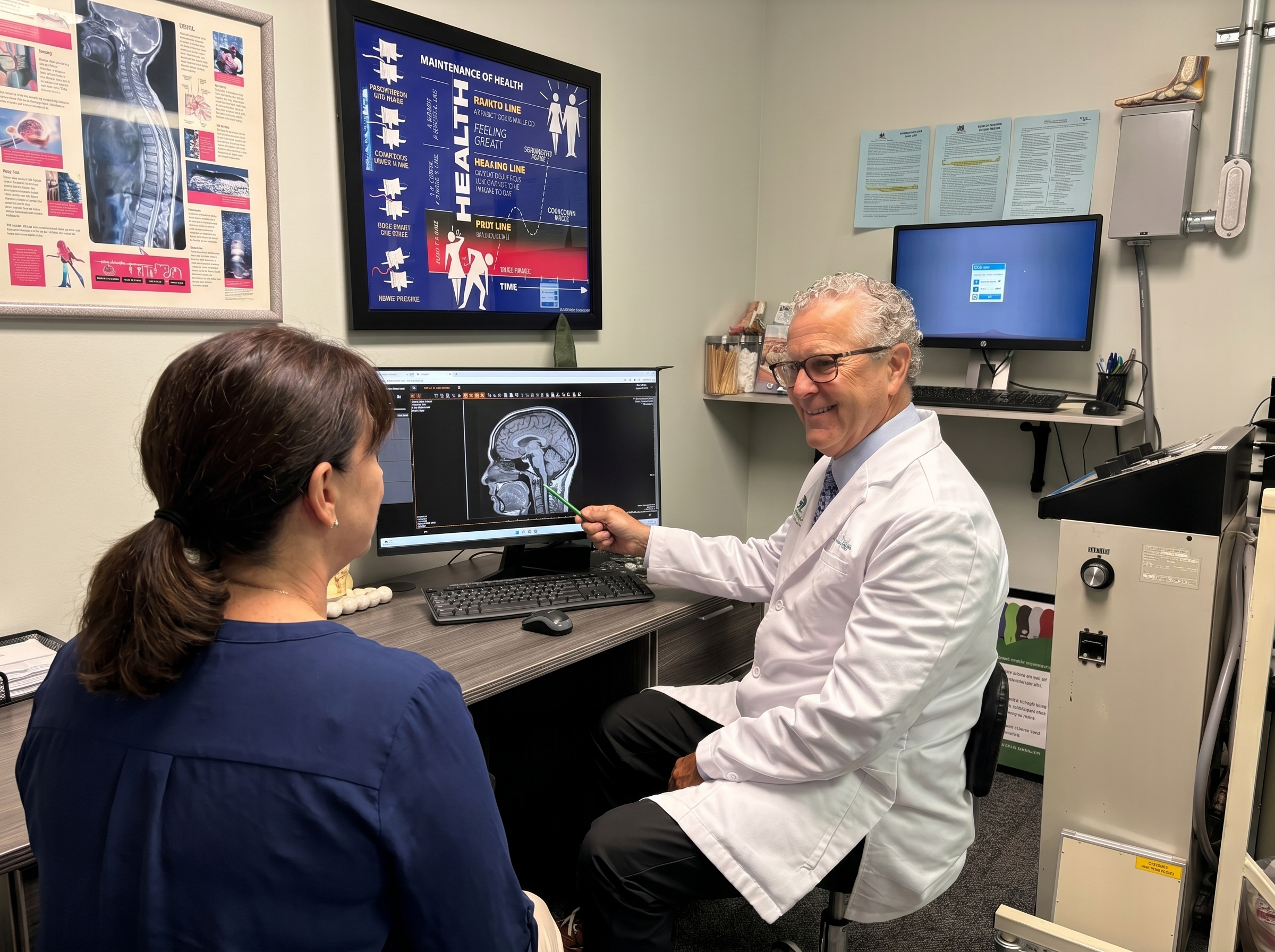
Your first visit begins with a thorough evaluation — a detailed symptom and headache history, cervical examination, and review of any available MRI or imaging. The evaluation identifies which disc levels are involved, the degree of compression or degeneration present, and whether decompression is the appropriate treatment given the specifics of your case. Not every patient with headaches is a candidate, and the consultation is designed to give an honest, accurate answer about what treatment can reasonably accomplish.
Treatment timelines vary based on the severity of disc involvement, the chronicity of your headaches, and how your cervical spine responds to decompression. Progress is tracked at each visit and the plan is adjusted as your spine responds. Every plan is different because every patient is different.
"Our goal is to identify whether your headaches have a structural cervical cause, and if they do, to treat that cause directly rather than manage your symptoms indefinitely."
Frequently Asked Questions
Schedule Your Headache Consultation
If your headaches are frequent, chronic, or resistant to medication, a cervical evaluation may identify a cause that hasn't yet been treated. We're accepting new patients from Canton, North Canton, Massillon, Jackson Township, Belden Village, and surrounding communities.