
Real Relief from
Spinal Disc Bulge
A bulging disc doesn't have to mean a life built around pain management and limitations. Targeted non-surgical treatment can reduce disc pressure, calm irritated nerves, and restore the movement and function you've been missing.
A bulging disc is one of the most common sources of neck pain, back pain, and radiating nerve symptoms — and one of the most frequently mismanaged. Patients are often told to wait it out, medicate the pain, or prepare for surgery before a real structural solution has ever been tried. At Advanced Disc & Joint Solutions, we've spent 40+ years treating disc injuries non-surgically with consistent, measurable results.
Our treatment approach addresses the disc directly — reducing intradiscal pressure, relieving nerve compression, and allowing the disc to recover. If a bulging disc is driving your pain, limiting your movement, or sending symptoms down your arms or legs, the right answer isn't always the most invasive one. Let's find out what's actually going on first.
What Is a Spinal Disc Bulge?
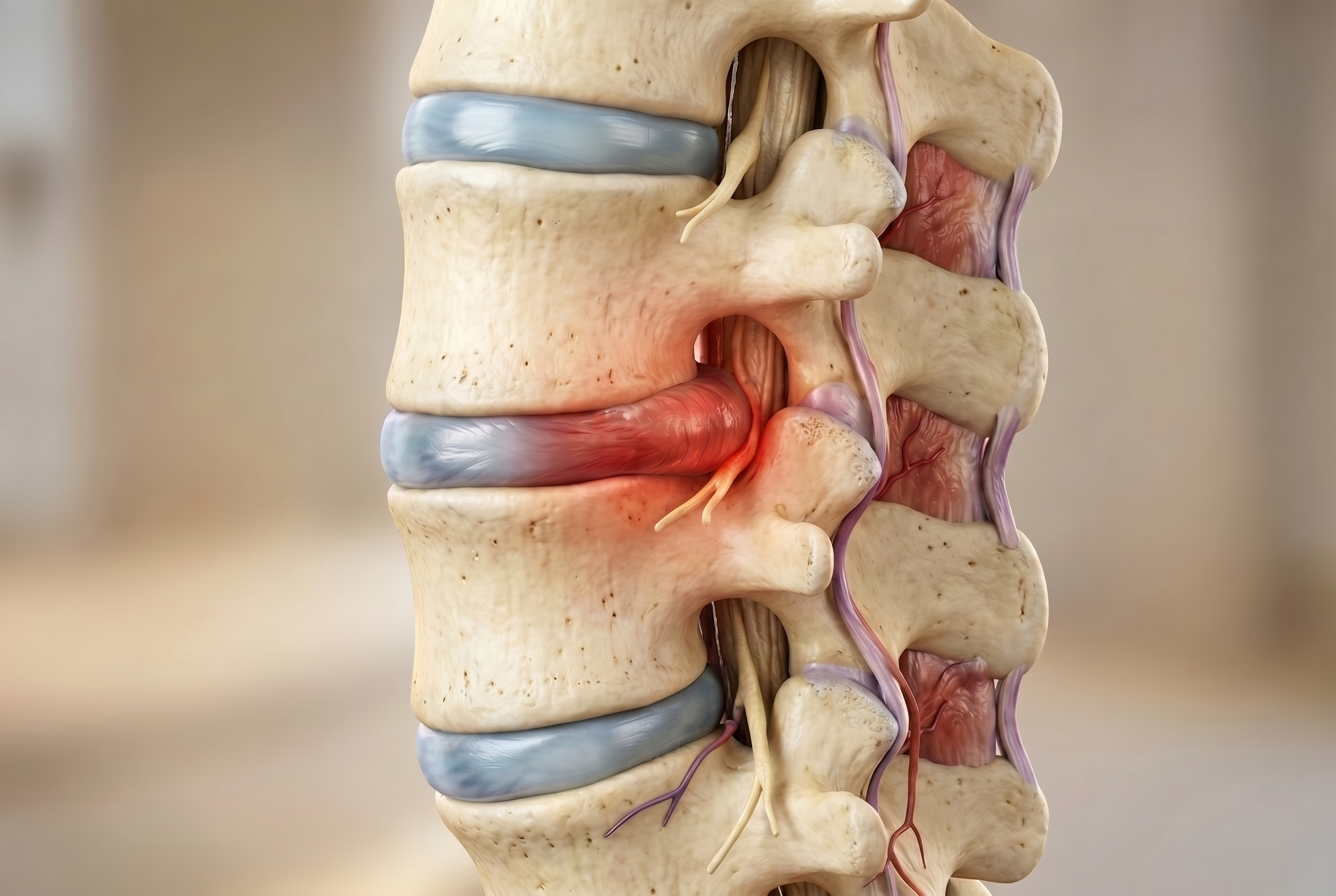
A spinal disc bulge occurs when the outer wall of an intervertebral disc — the tough, fibrous annulus fibrosus — weakens and allows the disc to extend beyond its normal boundaries. Unlike a herniation, where the inner gel-like nucleus ruptures through the outer wall, a bulging disc remains intact but protrudes outward, often broadly around the disc's circumference.
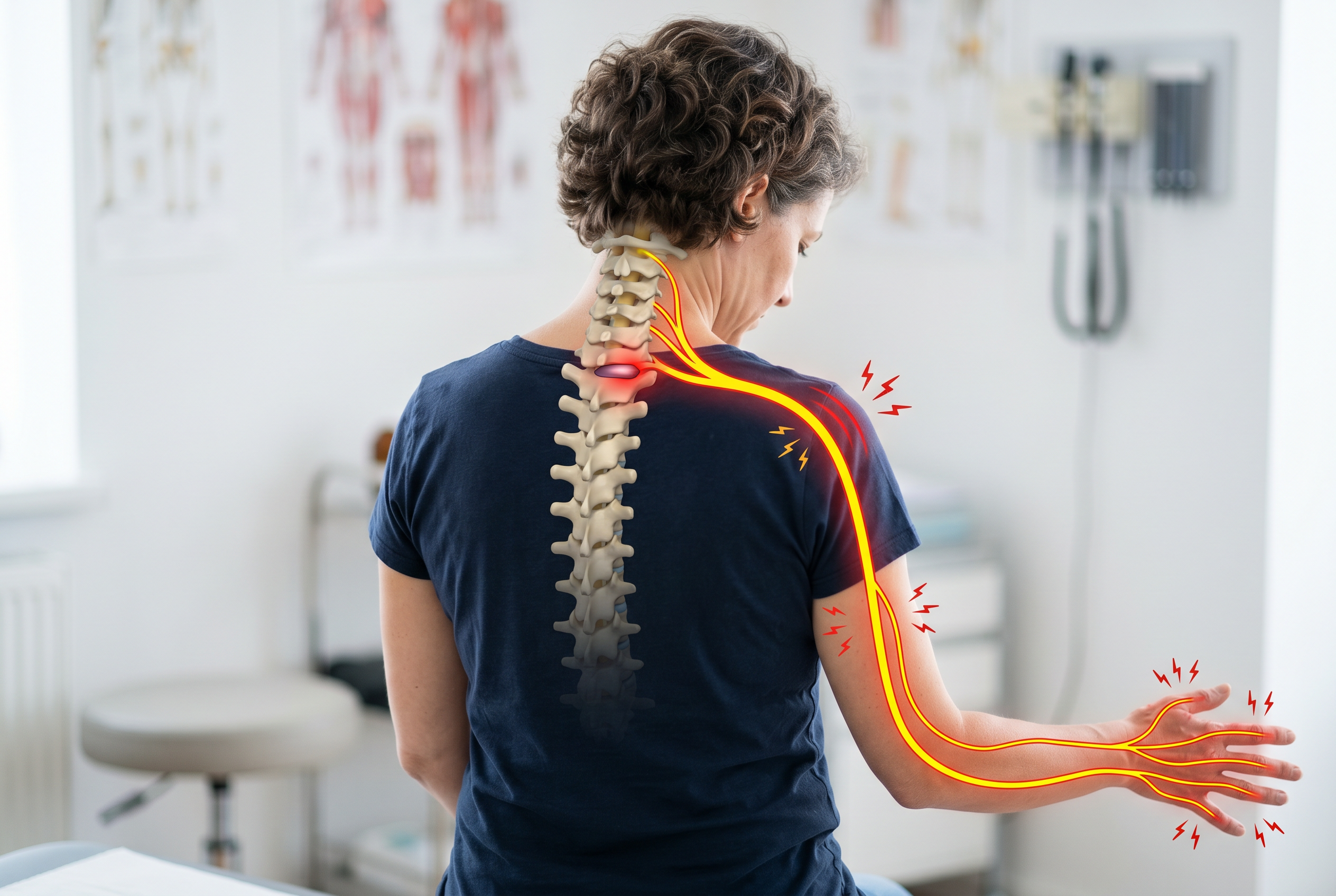
That outward bulge can encroach on the spinal canal, narrow the foraminal openings where nerve roots exit, and compress nearby neural structures. In the lumbar spine, this frequently produces lower back pain along with radiating symptoms into the buttocks, legs, and feet — a pattern commonly referred to as sciatica. In the cervical spine, a bulging disc can compress nerves that supply the arms, producing neck pain, shoulder pain, and numbness or tingling into the hands.
A bulging disc is a mechanical problem with a mechanical solution. Spinal decompression directly reduces intradiscal pressure and foraminal compression — targeting the source of your symptoms, not just masking them.
What Causes a Disc Bulge?
Disc bulges develop when cumulative stress exceeds the disc's structural tolerance. That can happen gradually over years or accelerate quickly with a specific injury. These are the most common contributing factors we see in patients from Canton, Massillon, North Canton, and across Stark County.
- Age-Related Disc Degeneration — Discs naturally lose water content and elasticity over time, making the annular wall more susceptible to bulging under the compressive loads of daily activity. Degeneration doesn't cause pain on its own, but it creates conditions where a bulge becomes more likely.
- Poor Posture & Sustained Compression — Prolonged sitting, forward head posture, and repetitive spinal loading create uneven pressure across disc surfaces. Over time, this drives disc material toward areas of least resistance — most often the posterior and posterolateral regions closest to nerve structures.
- Repetitive Lifting or Physical Work — Repeated bending, twisting, and heavy lifting places significant cumulative stress on lumbar discs. Workers in physically demanding roles often present with disc bulges at the L4-L5 and L5-S1 levels — the two most loaded segments of the lumbar spine.
- Acute Injury or Trauma — A sudden compressive force — a fall, a car accident, or improper lifting — can acutely stress the annular fibers and precipitate a bulge in an otherwise healthy disc, or significantly worsen existing disc degeneration.
Symptoms of a Disc Bulge
Disc bulge symptoms vary depending on which level is affected and which structures are being compressed. Some bulges are asymptomatic — visible on imaging but not producing pain. Others generate significant, disabling symptoms. If any of these patterns are familiar, a proper evaluation is the right first step.
- Localized lower back or neck pain that worsens with prolonged sitting, bending, or lifting
- Radiating pain, numbness, or tingling into the buttocks, legs, or feet (lumbar disc bulge)
- Radiating pain, numbness, or tingling into the shoulders, arms, or hands (cervical disc bulge)
- Muscle weakness in the legs or arms corresponding to the affected nerve level
- Sharp, shooting pain that worsens with coughing, sneezing, or bearing down
- Bladder or bowel changes in severe cases — requires immediate evaluation

How We Treat Disc Bulges
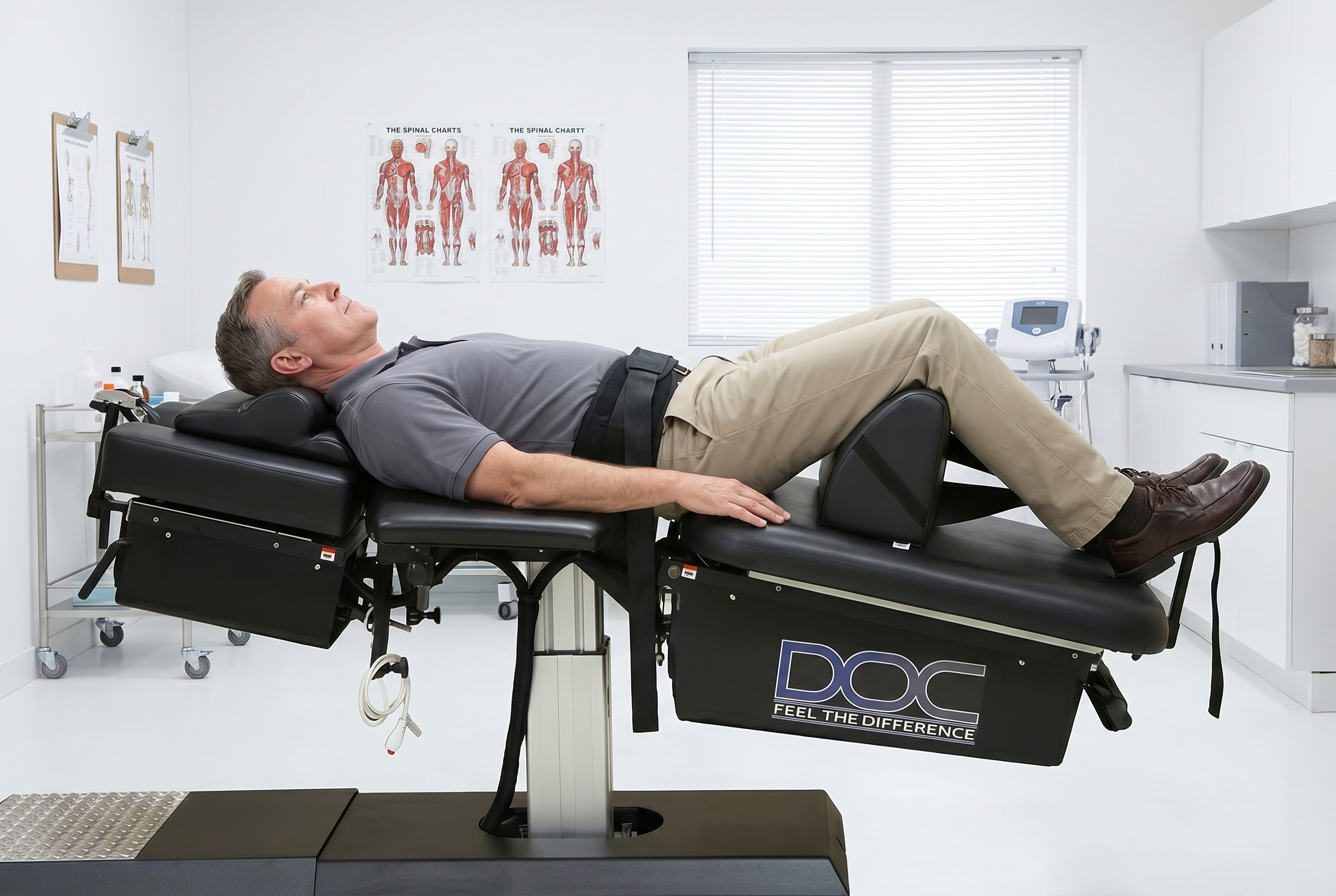
Our primary treatment for spinal disc bulges is non-surgical spinal decompression — a targeted, evidence-based protocol that addresses the mechanical source of your pain. By applying precise, computer-controlled traction to the affected disc level, decompression creates a negative intradiscal pressure that draws the bulging disc material away from the nerve, reduces foraminal compression, and promotes nutrient-rich fluid exchange within the disc to support recovery.
The disc has limited blood supply and heals poorly under compression. Decompression changes that environment — reducing the compressive forces that are preventing the disc from recovering and giving the annular fibers the mechanical conditions they need to rehydrate and stabilize. For many patients, this means a meaningful and lasting reduction in both local pain and radiating nerve symptoms.
- FDA-cleared, non-invasive decompression therapy
- Precisely targets the specific disc level confirmed on imaging
- Comfortable 30-minute sessions with no downtime
- Personalized plan built around your disc level, symptom pattern, and functional goals
Your Personalized Treatment Plan
Your first appointment begins with a comprehensive evaluation — a detailed symptom history, orthopedic and neurological examination, and review of your MRI or imaging to identify the specific disc level, the direction and degree of bulge, and which neural structures are involved. From that information, a customized treatment plan is built around your case — not a generic protocol applied to every disc patient.
Treatment timelines depend on how long the disc has been compromised, the degree of bulge and nerve involvement, and how your body responds in the early phases of care. We track your functional and symptomatic progress closely throughout your plan, adjusting treatment parameters as your disc responds, and communicating clearly at every stage so you understand exactly where you are in the process.
"Our goal isn't to help you manage a damaged disc — it's to treat it directly, reduce the compression driving your symptoms, and restore the function you've been told is just part of getting older."

Frequently Asked Questions
Schedule Your Disc Bulge Consultation
A bulging disc is a structural problem — and structural problems have structural solutions. Relief without surgery is possible, and it starts with understanding exactly what's happening at your affected disc level. We're accepting new patients from Canton, North Canton, Massillon, Jackson Township, Belden Village, and surrounding communities.