
Real Relief from a
Herniated Disc
A herniated disc can hijack your entire life — causing pain, numbness, and weakness that make even basic movement a challenge. Surgery isn't your only option.
A herniated disc is one of the most common sources of serious spinal pain — and one of the most mismanaged. Many patients in Canton and the surrounding Stark County area are told to rest, take medication, or consider surgery before ever exploring what non-surgical treatment can do. At Advanced Disc & Joint Solutions, we've spent 40+ years helping patients right here in Northeast Ohio heal herniated discs without going under the knife.
Our team will evaluate your specific disc, your imaging, and your symptoms to build a treatment plan designed around you — not a one-size-fits-all protocol. If you're in pain, we're ready to help.
What Is a Herniated Disc?
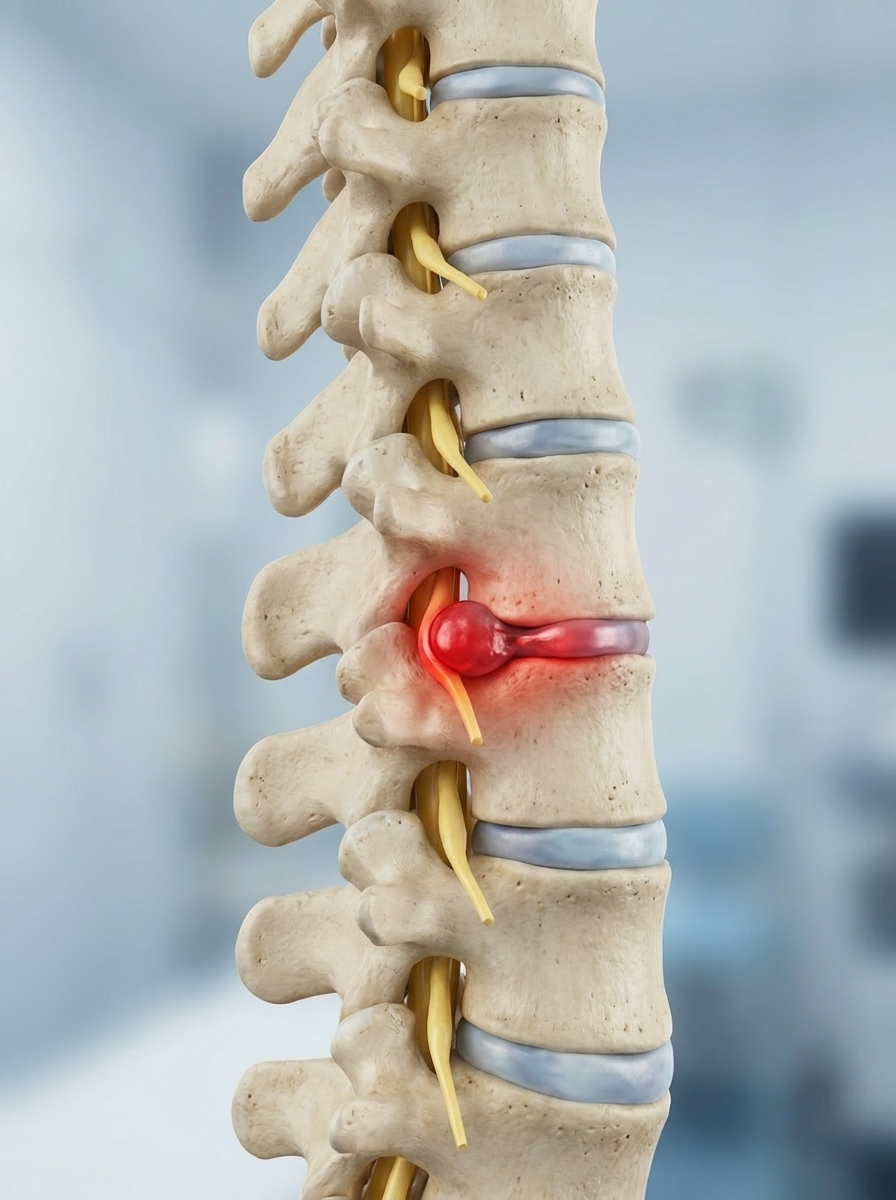
Each spinal disc is built like a jelly donut — a tough outer shell (the annulus fibrosus) surrounding a soft, gel-like interior (the nucleus pulposus). When that outer shell develops a crack or tear, the inner gel can push through and press against nearby spinal nerves. That's a herniation, and it's why the pain can be so intense and far-reaching.
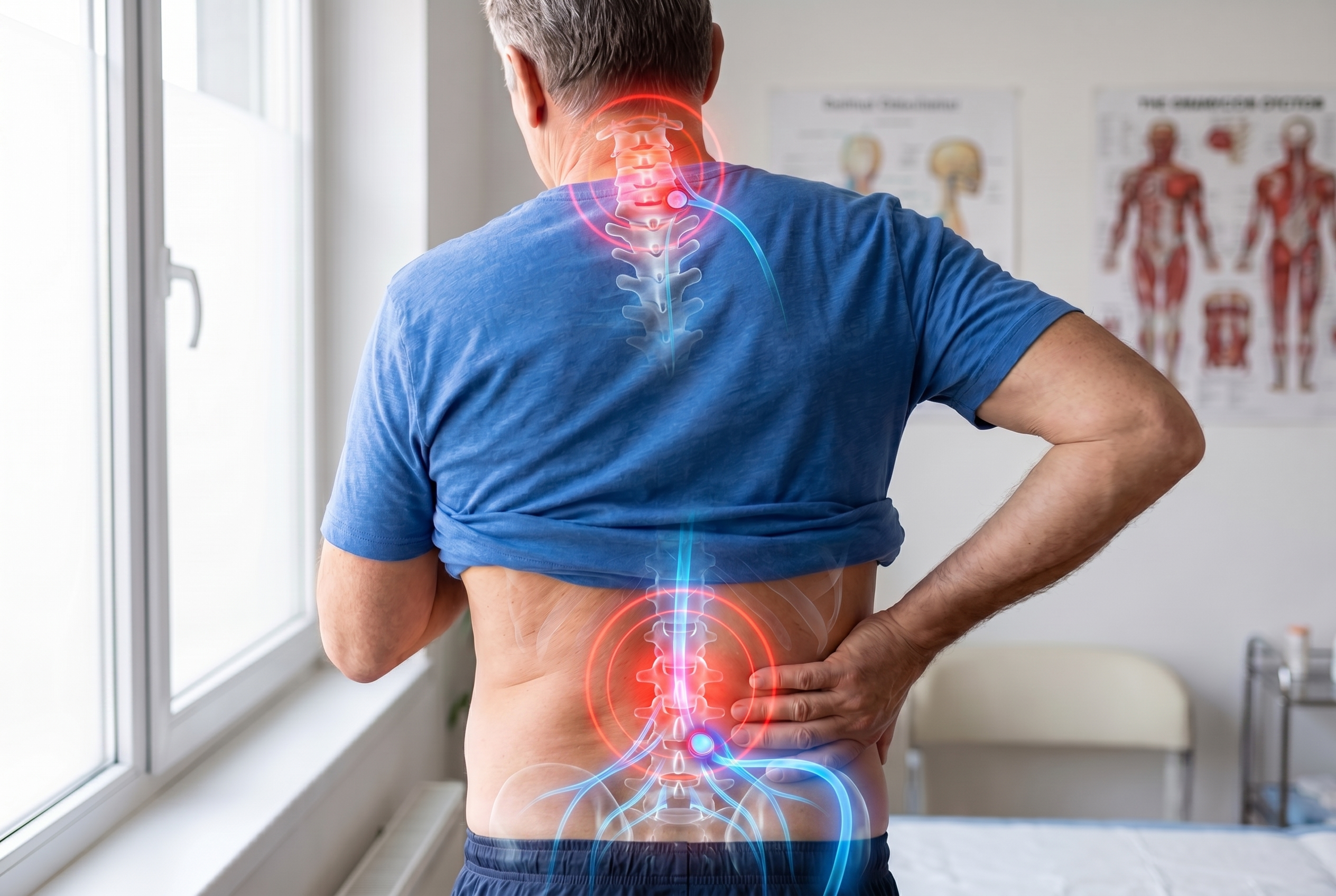
Herniations most commonly occur in the lower back (lumbar spine) or neck (cervical spine), though they can happen anywhere along the spine. Depending on the location and severity, a herniated disc can cause localized back pain, radiating leg or arm pain, numbness, tingling, or muscle weakness.
A herniated disc doesn't always cause pain right away. But when nerve compression develops, symptoms can escalate quickly — making early evaluation and treatment critical to getting ahead of the damage.
What Causes a Herniated Disc?
Disc herniations rarely happen from a single dramatic event. In most cases, they're the result of gradual wear — combined with a triggering factor that pushes a weakened disc past its limit. These are the most common contributors we see in patients coming to us from Canton, Massillon, North Canton, and surrounding communities.
- Age-Related Disc Degeneration — As discs age, they lose water content and elasticity, making the outer shell more vulnerable to cracking under everyday stress.
- Repetitive Movement & Strain — Jobs or activities involving repeated bending, twisting, or lifting gradually weaken disc integrity over time — even without a single obvious injury.
- Sudden Trauma or Improper Lifting — A fall, car accident, or lifting with poor mechanics can apply enough force to rupture a disc that was already under stress.
- Prolonged Sitting & Poor Posture — Sustained pressure on the lumbar discs from long hours of sitting — especially with poor posture — accelerates disc breakdown and increases herniation risk.
Symptoms of a Herniated Disc
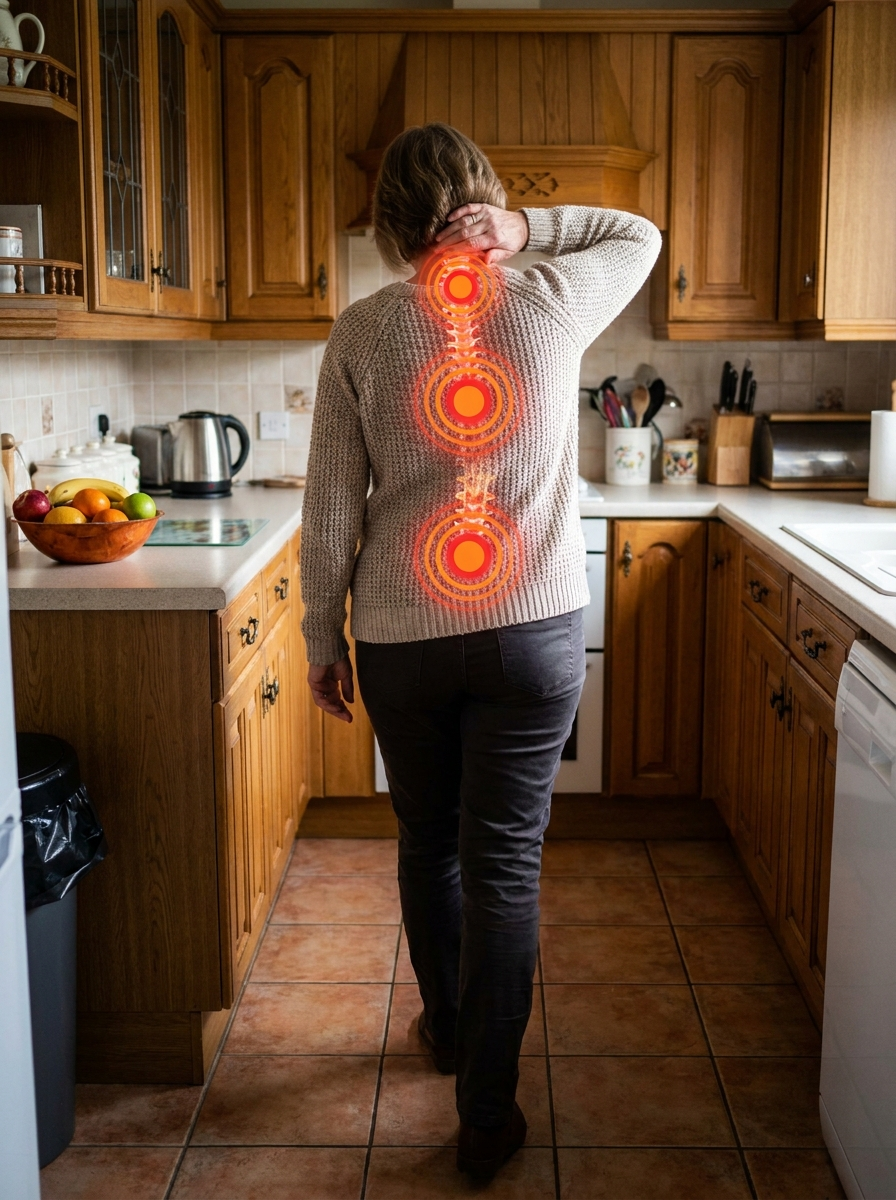
Symptoms depend on where the herniation is and which nerves are being compressed. Some patients experience intense, immediate pain; others deal with gradually worsening discomfort for months before seeking help. If any of these sound familiar, don't wait.
- Sharp, localized pain in the neck, mid-back, or lower back
- Radiating pain, burning, or tingling that travels into your arm or leg
- Numbness or reduced sensation in an extremity
- Muscle weakness in the arm, hand, leg, or foot
- Pain that worsens with sitting, bending, coughing, or sneezing
- Stiffness and limited range of motion in the spine
How We Treat Herniated Discs
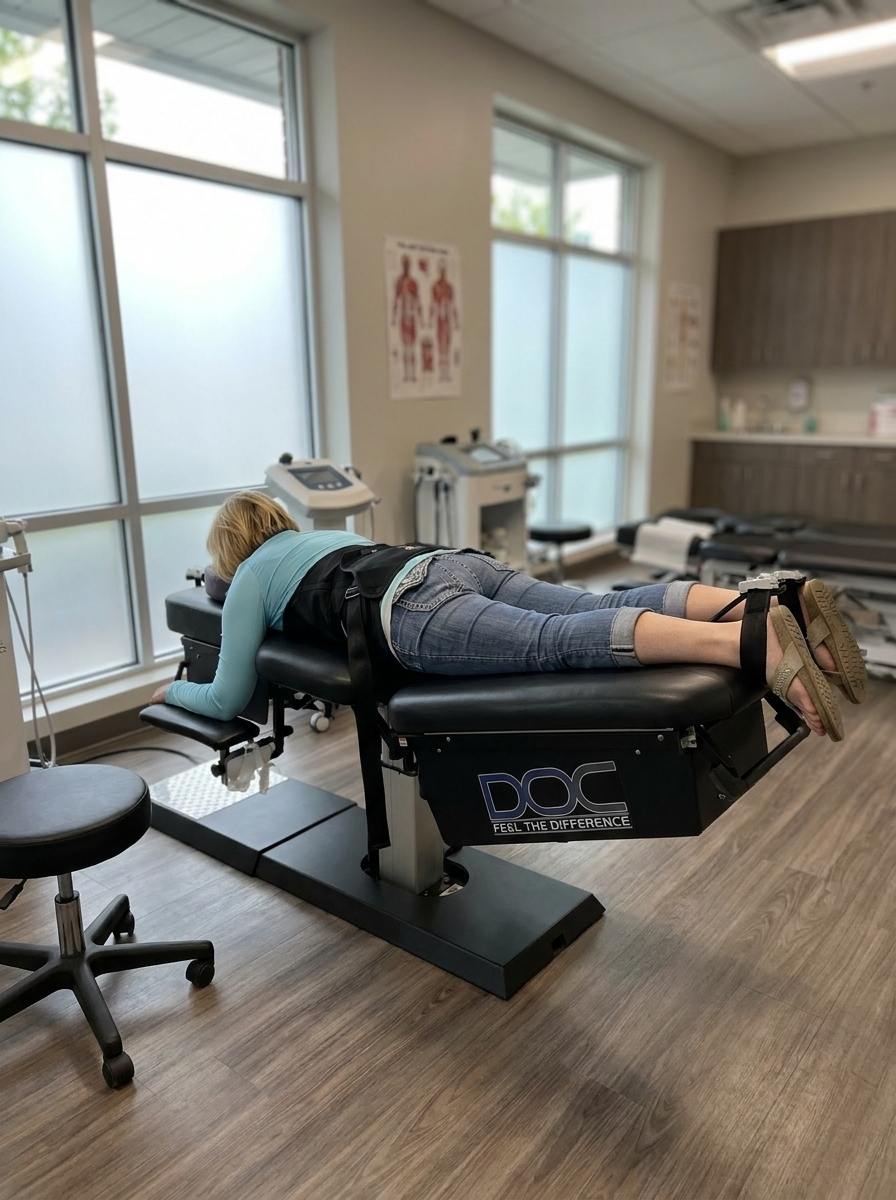
Our specialized approach uses non-surgical spinal disc decompression — a proven method that directly targets the herniated disc without surgery, injections, or medication. The treatment applies precise, gentle traction to create negative pressure inside the disc, drawing the herniated material back toward the center and relieving pressure on the compressed nerve.
As the disc rehydrates and the nerve compression eases, pain, numbness, and weakness begin to resolve — often in ways that rest and medication alone can't achieve.
- FDA-cleared, non-invasive decompression therapy
- Targets the specific disc level confirmed by your imaging
- Comfortable 30-minute sessions with no downtime
- Personalized plan built around your condition, severity, and goals
Your Personalized Treatment Plan
Your first appointment starts with a thorough evaluation — a review of your symptoms, a spinal exam, and your MRI or imaging to identify exactly which disc is herniated and how severely. From there, a customized plan is built around your specific condition, not a generic template.
Recovery timelines vary based on the location of the herniation, its severity, and how long you've been dealing with it. Our team monitors your progress at every step and adjusts your plan as needed to keep things moving in the right direction.
"We're not here to keep you in treatment longer than necessary. We're here to fix the problem and get you back to your life."

Frequently Asked Questions
Schedule Your Herniated Disc Consultation
You don't have to keep managing disc pain with medication or accept surgery as inevitable. Relief is within reach, and it starts with a conversation. We're accepting new patients from Canton, North Canton, Massillon, Jackson Township, Belden Village, and surrounding communities.