
Other Disc-Related Conditions
We Treat
Not every case fits a single named diagnosis. If your pain has gone unresolved or unexplained, disc-related compression may still be the cause — and non-surgical treatment may still be an option.
Not every patient arrives with a diagnosis that fits one of the named conditions on our other pages. Some come with persistent neck or back pain that has not been explained, complex spinal histories involving prior surgery, or nerve-related symptoms in the extremities that other providers have not been able to resolve. What many of these cases share is a disc-related origin — and that means they may respond to the same non-surgical approach that guides every treatment at Advanced Disc & Joint Solutions. Our team has spent 40+ years evaluating and treating a wide range of disc and nerve conditions throughout Canton, Ohio and the surrounding Stark County communities.
The conditions described here are among the most common we evaluate outside of our named diagnosis pages: cervical spondylosis, disc-related peripheral neuropathy, post-surgical back pain, and degenerative spondylolisthesis. If you've been told your options are limited — or if you're not sure which category your pain falls into — a free consultation is the right starting point.
Understanding These Disc Conditions
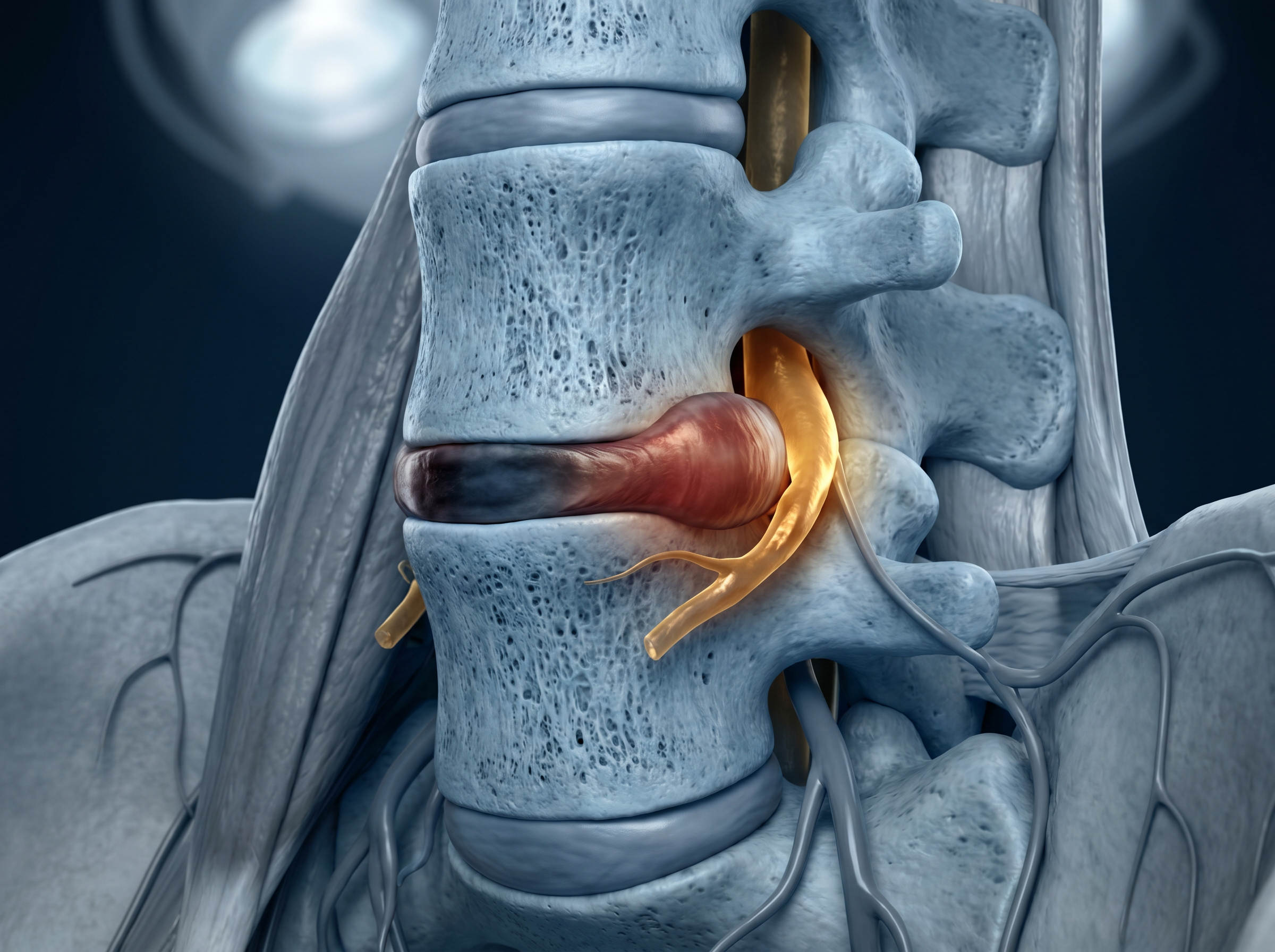
Each of the four conditions described here involves disc-related structural changes that compress or irritate spinal nerves. They differ in location and specific presentation, but they share a common origin: deteriorating disc tissue reduces the structural support between vertebrae, narrows the spaces available for nerves, and produces the chronic compression that generates symptoms. That shared mechanical origin is why spinal decompression — which works directly on those compressive forces — can be effective across all four.
Cervical Spondylosis
Cervical spondylosis refers to age-related degenerative changes affecting the cervical spine — the seven vertebrae in the neck. As cervical discs lose hydration and height, the cartilage between vertebrae wears down, bone spurs can form, and the foraminal passageways through which nerve roots exit the spine narrow. The American Academy of Orthopaedic Surgeons notes that cervical spondylosis affects the majority of adults over the age of 60. Many patients with this condition experience chronic neck stiffness and pain; when nerve root compression develops, symptoms including arm pain, hand numbness, and reduced grip strength can follow. Spinal decompression addresses the compressive forces at the affected cervical levels, creating controlled separation between vertebrae and reducing the load on irritated nerve roots.
Disc-Related Peripheral Neuropathy
Peripheral neuropathy produces burning, tingling, numbness, or weakness in the hands and feet, and is frequently attributed to systemic causes like diabetes without a thorough evaluation of the spine. When spinal disc compression — whether from a bulging disc, herniated disc, or foraminal narrowing caused by disc height loss — compresses the nerve roots that feed the peripheral nervous system, the resulting symptoms can closely resemble classic peripheral neuropathy. Identifying the spinal origin and treating it through decompression can produce improvement in peripheral symptoms that systemic neuropathy treatments have not achieved. A complete evaluation, including a review of your imaging, is needed to determine whether disc compression is the primary driver.
Post-Surgical Back Pain
Post-surgical back pain describes persistent or recurring spine and leg pain following spinal surgery — a presentation described in medical literature as failed back surgery syndrome. In many cases, surgery addresses one structural problem while leaving related disc pathology, adjacent segment degeneration, or ongoing nerve involvement unchanged. Patients in this situation are frequently told that further treatment options are limited. Spinal decompression can be appropriate in certain post-surgical cases, particularly where residual disc compression or adjacent-level disc disease is contributing to ongoing pain. Eligibility depends on the nature of the original procedure, the current state of the disc, and whether surgical hardware is present.
Degenerative Spondylolisthesis (Grade I and II)
Spondylolisthesis occurs when one vertebra slips forward relative to the one below it, producing instability and often nerve compression at that level. The most common form in adults is degenerative spondylolisthesis, in which disc deterioration reduces the structural support that keeps adjacent vertebrae aligned. Grade I and Grade II slippage represent milder degrees of movement, and patients with these presentations frequently experience chronic low back pain, tightness in the lower back and buttocks, and nerve symptoms similar to those seen with stenosis or disc herniation. Spinal decompression can help manage the disc-related component by reducing compressive forces at the involved level and improving the mechanical environment for nerve recovery.
What These Conditions Have in Common
Each of these conditions, despite its distinct presentation and location, traces back to disc deterioration and the structural consequences that follow. As discs lose height and integrity, the spaces where nerves pass narrow, adjacent vertebrae carry load differently, and chronic nerve compression develops.
- Cervical Spondylosis — Disc height loss in the neck contributes to bone spur formation and foraminal narrowing, compressing cervical nerve roots.
- Disc-Related Neuropathy — Nerve root compression in the spine produces the peripheral symptoms felt in the extremities — symptoms that often go unattributed to a spinal source.
- Post-Surgical Pain — Disc pathology left unaddressed by surgery, or new degeneration at adjacent levels accelerated by altered spinal mechanics, drives ongoing symptoms.
- Spondylolisthesis — Loss of disc support allows vertebral slippage and the nerve compression that follows at the involved level.
Spinal decompression works by directly reducing compressive load on the disc and the structures around it, regardless of which condition those forces are producing. The mechanical principle remains the same across all four.
Common Symptoms Across These Conditions
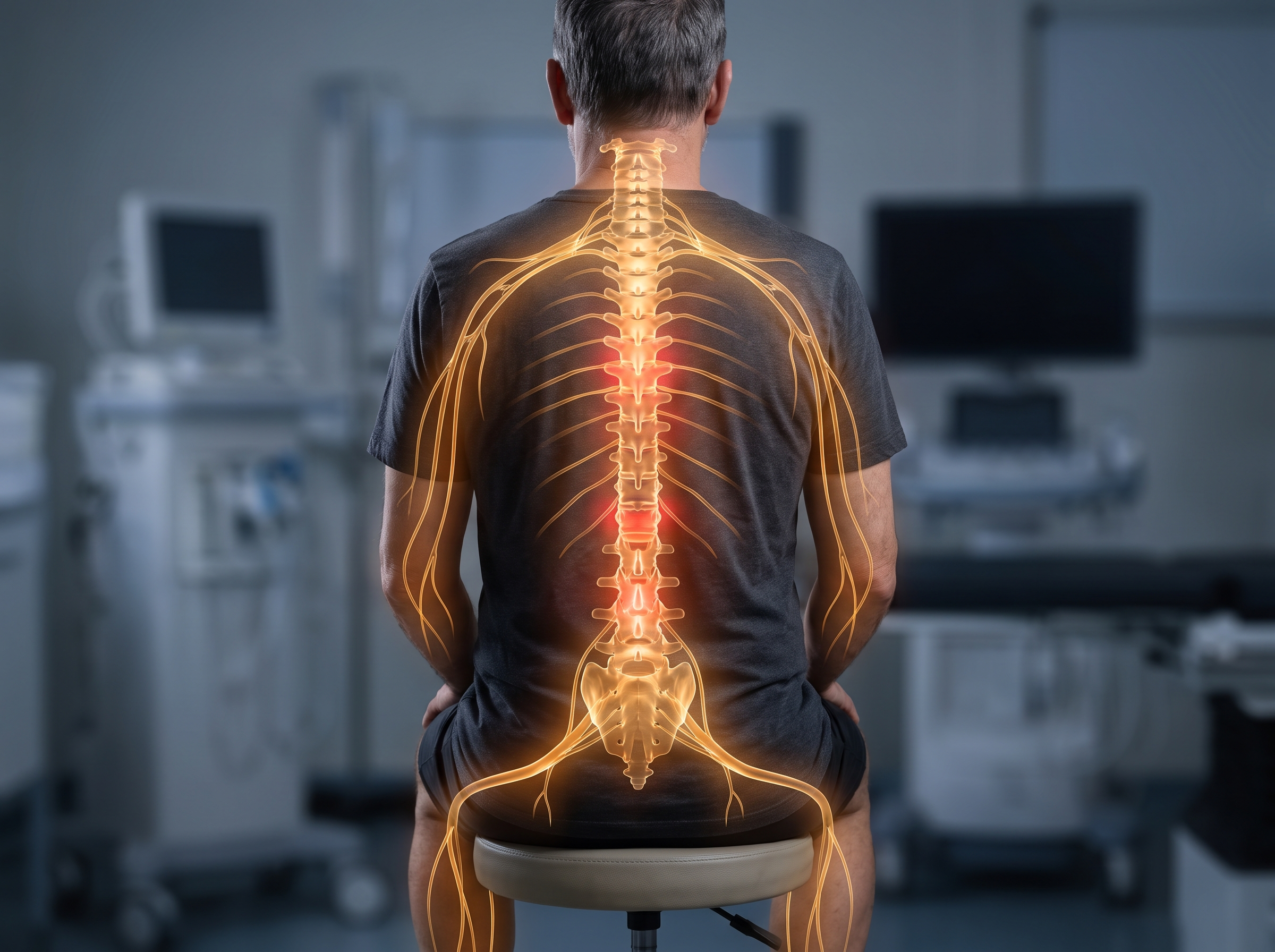
Symptoms across these four conditions overlap considerably, which is part of why they are often misdiagnosed or underrecognized. The following presentations appear frequently in patients evaluated at Advanced Disc & Joint Solutions who arrive without a clearly named condition. A comprehensive evaluation is the right step if any of these are familiar and have not been effectively treated.
- Chronic neck or low back pain that limits daily activity
- Radiating pain, burning, or tingling that travels into the arms, hands, legs, or feet
- Numbness or reduced sensation in the extremities
- Muscle weakness in the arms or legs
- Symptoms that worsen with prolonged sitting, standing, or specific postures
- Neurological symptoms including balance changes, difficulty with coordination, or reduced grip strength
- Persistent symptoms that have not responded to physical therapy, medication, or prior treatment
How We Evaluate and Treat These Conditions
Every patient evaluated for these conditions at Advanced Disc & Joint Solutions begins with the same process: a review of imaging and prior diagnostics, orthopedic and neurological testing, and an honest assessment of whether non-surgical spinal decompression is appropriate. The evaluation determines candidacy and, when decompression is appropriate, identifies which specific spinal levels to target.
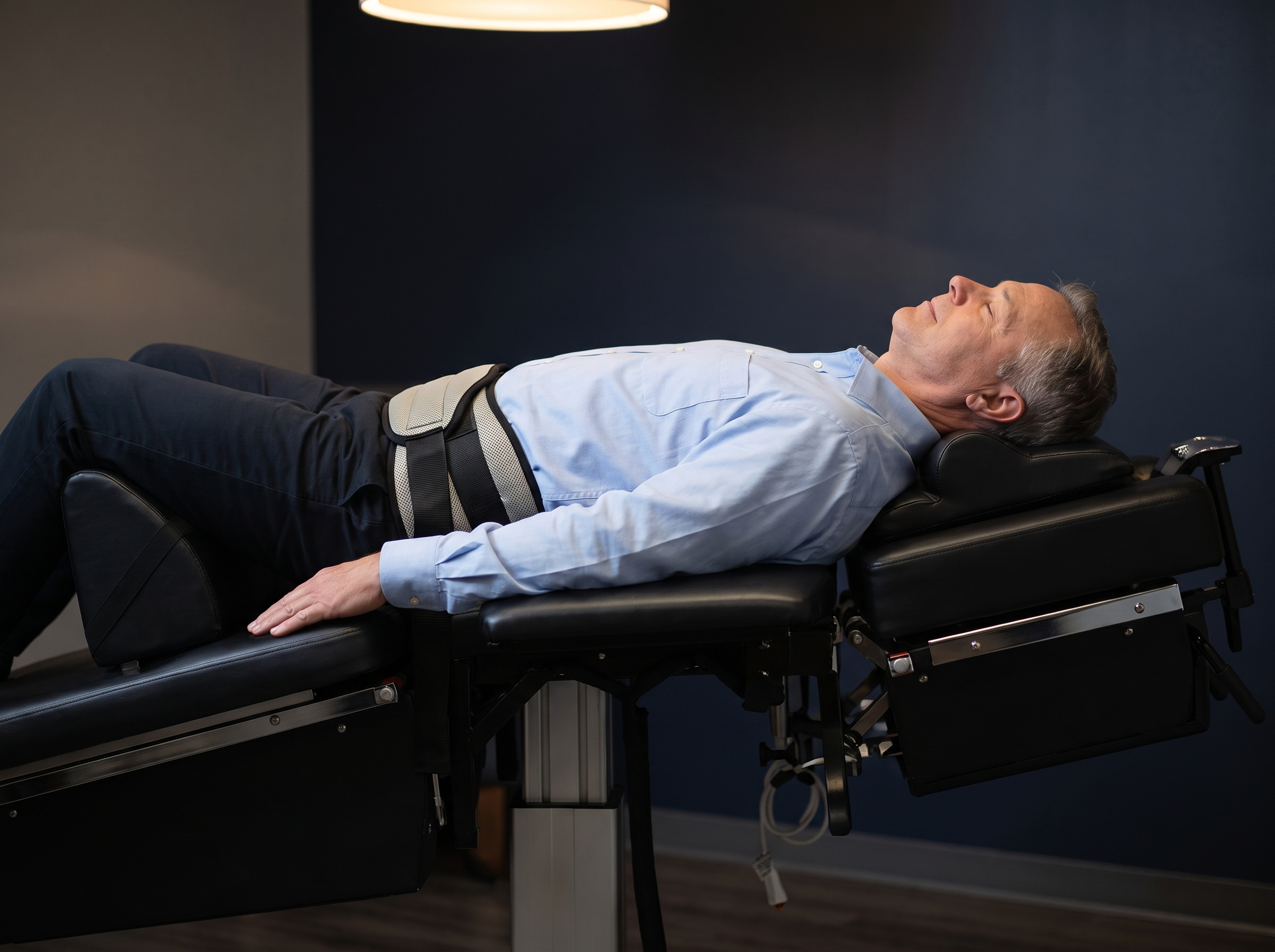
Treatment applies FDA-cleared, non-invasive traction to the affected spinal segments. The therapy creates controlled separation between vertebrae, reduces compressive load on the discs and nerve roots, supports disc rehydration, and allows irritated neural tissue to recover. Not every case with these conditions qualifies, and the consultation is designed to give an accurate answer before any treatment begins.
- FDA-cleared, non-invasive spinal decompression therapy
- Treatment targeted to the specific spinal levels confirmed in evaluation
- Comfortable 30-minute sessions with no required recovery time
- Individualized plan built around the confirmed diagnosis and functional goals
Your Personalized Treatment Plan
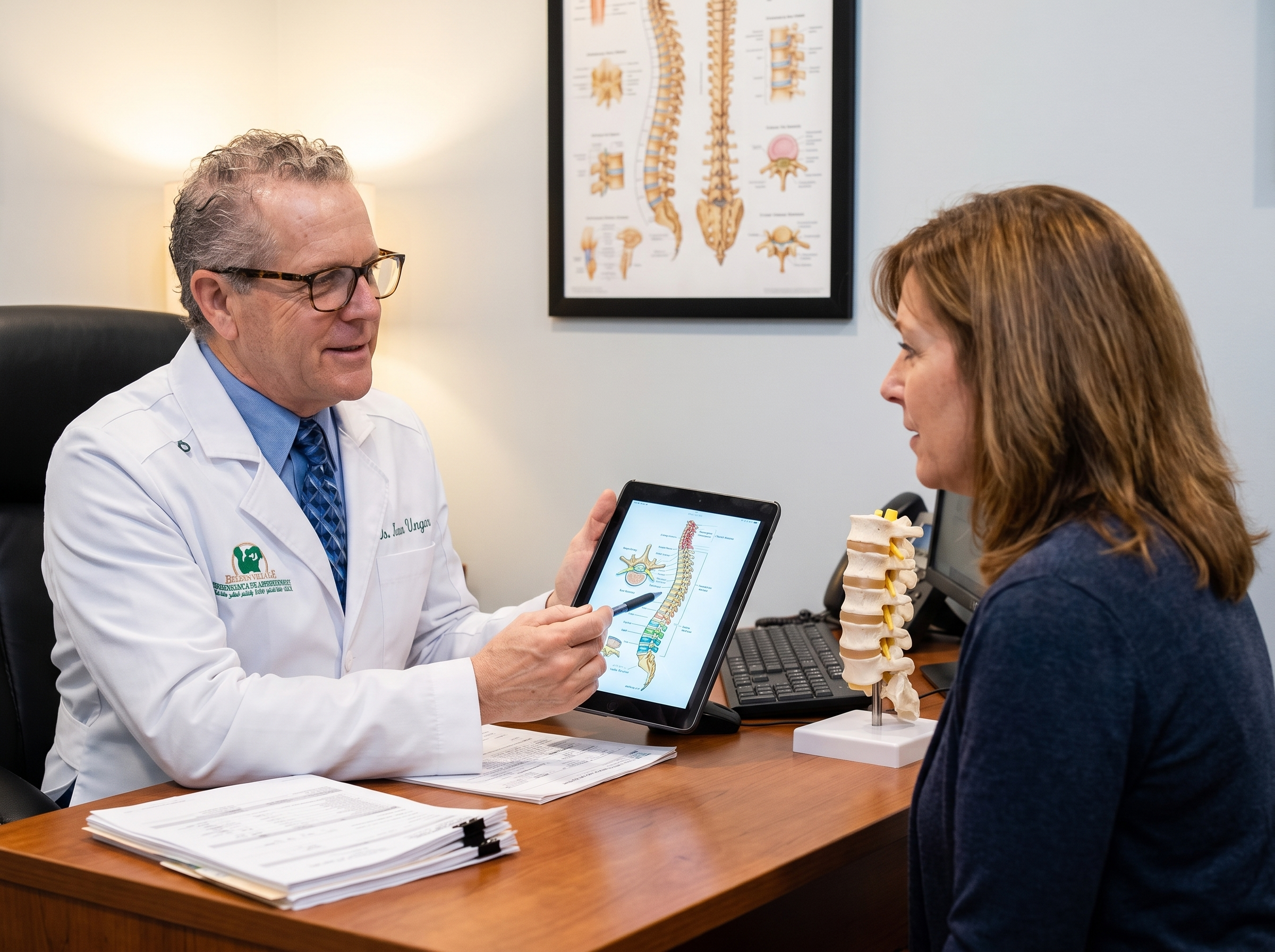
Your first appointment is a thorough evaluation. The team reviews your imaging, conducts orthopedic and neurological testing, and provides an accurate picture of what is happening in your spine and whether decompression therapy is the right fit. If it is, a treatment plan is developed around the specific levels involved, the degree of disc-related changes confirmed on imaging, and the functional goals that matter most to you.
Progress varies based on the condition, the degree of structural change, and how long symptoms have been present. Advanced Disc & Joint Solutions serves patients from Canton, Massillon, North Canton, Jackson Township, Belden Village, and the surrounding Stark County communities — including those who have already tried other approaches without lasting relief. Our aim is to address the structural source of the problem directly, not to manage symptoms indefinitely.
"If you've been told what can't be done without being shown what can, that's where we start."
Frequently Asked Questions
Schedule a Consultation for Disc-Related Conditions
If you're living with unresolved spinal pain, radiating nerve symptoms, or a condition that doesn't fit a named diagnosis, a free consultation is the right first step. The evaluation is thorough, the assessment is honest, and there's no commitment required. We accept new patients from Canton, North Canton, Massillon, Jackson Township, Belden Village, and surrounding communities throughout Northeast Ohio.